When do clocks go back in 2026? US, UK and EU dates explained.
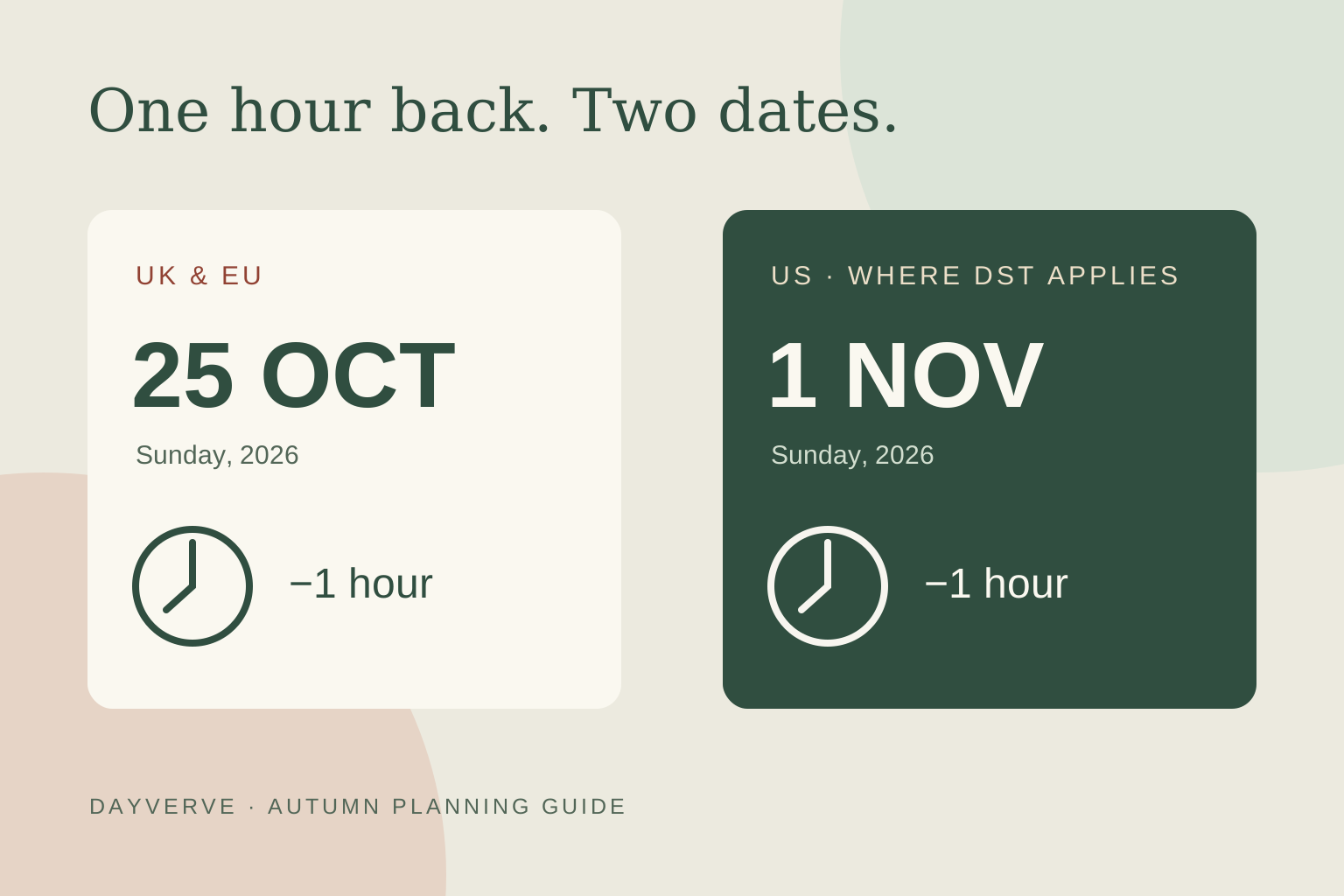
The UK and EU change on October 25; US areas observing daylight saving change on November 1. Here is what that means for clocks and transatlantic meetings.
 AI-generated illustration
The short answer: two Sundays, one hour back
| Place | Date | Change |
|---|---|---|
| UK | Sunday, October 25 | 2am BST → 1am GMT |
| EU | Sunday, October 25 | Back to standard time; local hour varies |
| US areas observing DST | Sunday, November 1 | 2am local daylight time → 1am standard time |
In autumn 2026, the UK and EU return to standard time on Sunday, October 25. In US areas that observe daylight saving time, clocks go back on Sunday, November 1. The dates are a week apart. If you are arranging a call across the Atlantic, check the specific date rather than relying on the time difference you use through most of October. This guide covers the UK, EU and US; it does not assume every European country or American territory follows the same rules.
UK: October 25, at 2am
GOV.UK lists October 25 as the 2026 autumn clock-change date. At 2am British Summer Time, clocks move back to 1am Greenwich Mean Time. A manual wall clock needs its displayed time moved back one hour. For an appointment around the repeated hour, ask the organiser to identify the intended occurrence or UTC time. Saying only “1:30 on Sunday” can leave an ambiguity that an ordinary afternoon meeting would not have.
EU: October 25, with different local clock readings
The Council of the EU describes the current system as a return to standard time on the last Sunday of October. In 2026 that date is October 25. The EU includes different time zones, so the UK example of “2am becomes 1am” should not be copied indiscriminately onto every European location. Check the destination city for an overnight journey. The Council also states that the proposal to end seasonal changes has not received a final decision; a proposal or old headline is not proof the 2026 change has been cancelled.
US: November 1, where daylight saving is observed
NIST lists November 1 at 2am local time as the end of US daylight saving time in 2026. The clock returns to 1am. Its local-time guidance identifies exceptions including Hawaii and most of Arizona; the Navajo Nation does observe daylight saving. The country is not one time zone and does not have one universal clock-change experience. For a real booking, choose the actual destination rather than treating “US time” as a complete time-zone label.
Why a London–New York meeting shifts for one week
| Date in 2026 | London | New York | Berlin |
|---|---|---|---|
| October 23 | 2pm | 9am | 3pm |
| October 28 | 2pm | 10am | 3pm |
| November 4 | 2pm | 9am | 3pm |
Consider a hypothetical meeting held at 2pm in London on three dates. On Friday, October 23, it corresponds to 9am in New York. On Wednesday, October 28, it corresponds to 10am in New York. On Wednesday, November 4, it corresponds to 9am again. London has already changed on October 28 while New York has not. Berlin remains one hour ahead of London on these example afternoons. These are worked conversions for the named cities and dates, not a statement about every location in either country.
Choose which city anchors a recurring event
Suppose you organise that meeting. Do you want it to remain at 2pm London time, or at 9am New York time? Those are different instructions during the changeover week. Put the intended city time zone in the calendar event and inspect the occurrence on October 28 before inviting people. Send a short confirmation with the date and both local times. A sentence such as “Wednesday, October 28: 2pm London / 10am New York” is easier to act on than an unexplained “same time as usual.”
Check the setting before changing a device manually
NIST notes that many computer clocks and mobile phones update automatically. Before moving a device clock yourself, check whether automatic time and the correct location or time zone are enabled. Otherwise you risk applying a second adjustment to an already updated display. A wall clock, an appliance and a calendar event are separate things to check; fixing one does not verify the others. After the change, compare the device with a trusted time reference and inspect important appointments.
A five-minute checklist for travel and remote work
List the appointments that cross October 25 or November 1. For each one, write down its date, destination city and intended local time. Check transport confirmations with the operator, especially for overnight services in the repeated hour. Review recurring calls in your calendar rather than making mental one-hour corrections for the whole month. If someone shares a claim that clock changes have been abolished, follow it to the relevant current official source before adjusting plans. Recheck this guide against those sources if you are reading it after the stated source-check date.
 AI-generated illustration